Table are more prone to abuse than almost any other hotel furniture. They carry trays, laptops, wine glasses and electric stoves, and wipe dozens of times a day, but still look very nice in the guests' photos. When choosing materials, hotel owners are faced with a seemingly simple decision: high-pressure laminate (HPL), wood veneer or solid wood? Each material has truly distinct characteristics in terms of durability, cost, appearance and maintenance. This guide compares these three materials and helps you match them with the requirements of your project.
HPL is made from layers of decorative paper or fabric impregnated with melamine resin and fused under high pressure and heat onto a core board. The result is a dense, hard-wearing surface with excellent resistance to scratches, water, stains and heat. HPL offers an enormous range of colours, wood grains and stone textures, which makes it a favourite for hotels that need consistent finishes across many rooms.
Wood veneer is a thin slice of real wood, typically 0.5–1 mm thick, bonded to a stable core such as MDF or plywood. It delivers the authentic look and grain of natural timber while using far less wood than solid construction, keeping the cost accessible. Veneer table look premium and warm, but their thin surface layer requires protection and care in wet or high-wear areas.
Solid wood uses thick, one-piece timber, giving the most authentic texture, weight and long-term repairability — a surface that can be refinished rather than replaced. It is the most expensive option and requires proper sealing and humidity control, but in the right setting nothing matches its character and durability.
HPL has won surface toughness: Its melamine layer resizes scratches, impacts and heavy daily cleaning. Wood veneer is relatively soft. If not protected, there will be scratches or cracks at the edges. Solid wood is very sturdy, but its surface will wear out. Untreated wood will become dented or stained after extensive use.
HPL handles spills, coffee, wine and hot dishes with almost no risk of permanent damage. The wood veneer needs to have its edges sealed and wiped in time to prevent swelling and staining. Solid wood absorbs liquids. If its surface is damaged, it can crack under fluctuating humidity.
HPL offers the widest range of colors, patterns and textures with consistent quality. Wood veneer offers authentic texture at a medium cost. Solid wood offers the richest and most textured surface and the strongest statement in the high-end area.
HPL has the lowest upfront and life cycle costs: durable, replaceable and easy to clean. The wood veneer is located in the middle and requires more attention to protect the surface. Solid wood has the highest initial cost, but it can be repeatedly repaired, which offsets its price in traditional or luxurious environments.
HPL can use recycled materials and obtain low-emission certification. Wood veneer and solid wood rely on responsible sourcing (such as FSC-certified wood) and low-formaldehyde adhesives or finishes. You are always required to provide the exact documents of the products you ordered.
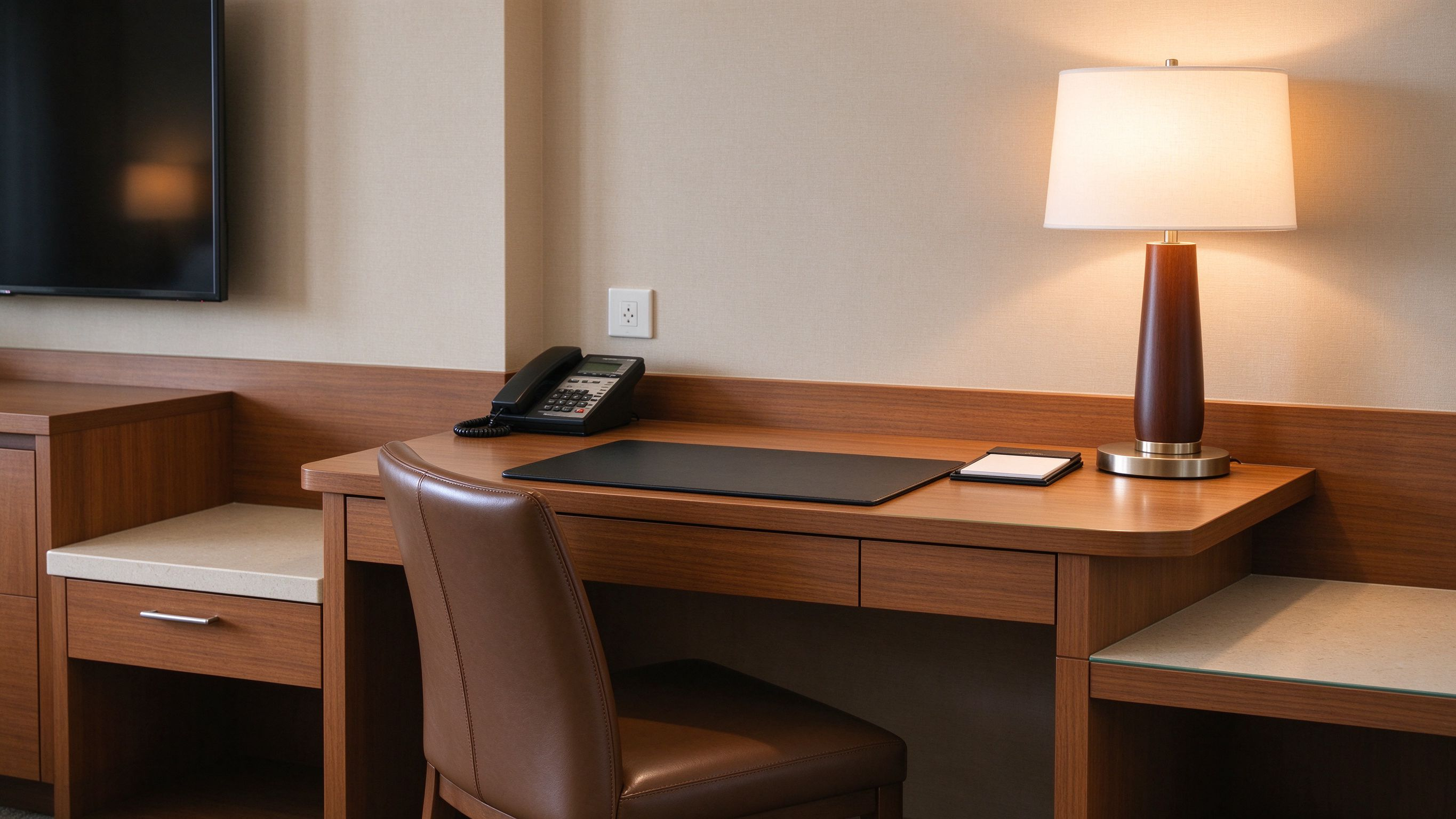
HPL is a practical choice here: lightweight, scratch-resistant, and easy to keep clean in dozens of identical rooms. In high-end rooms, if the edges are sealed and guests want to see a natural look, wood veneer works very well.
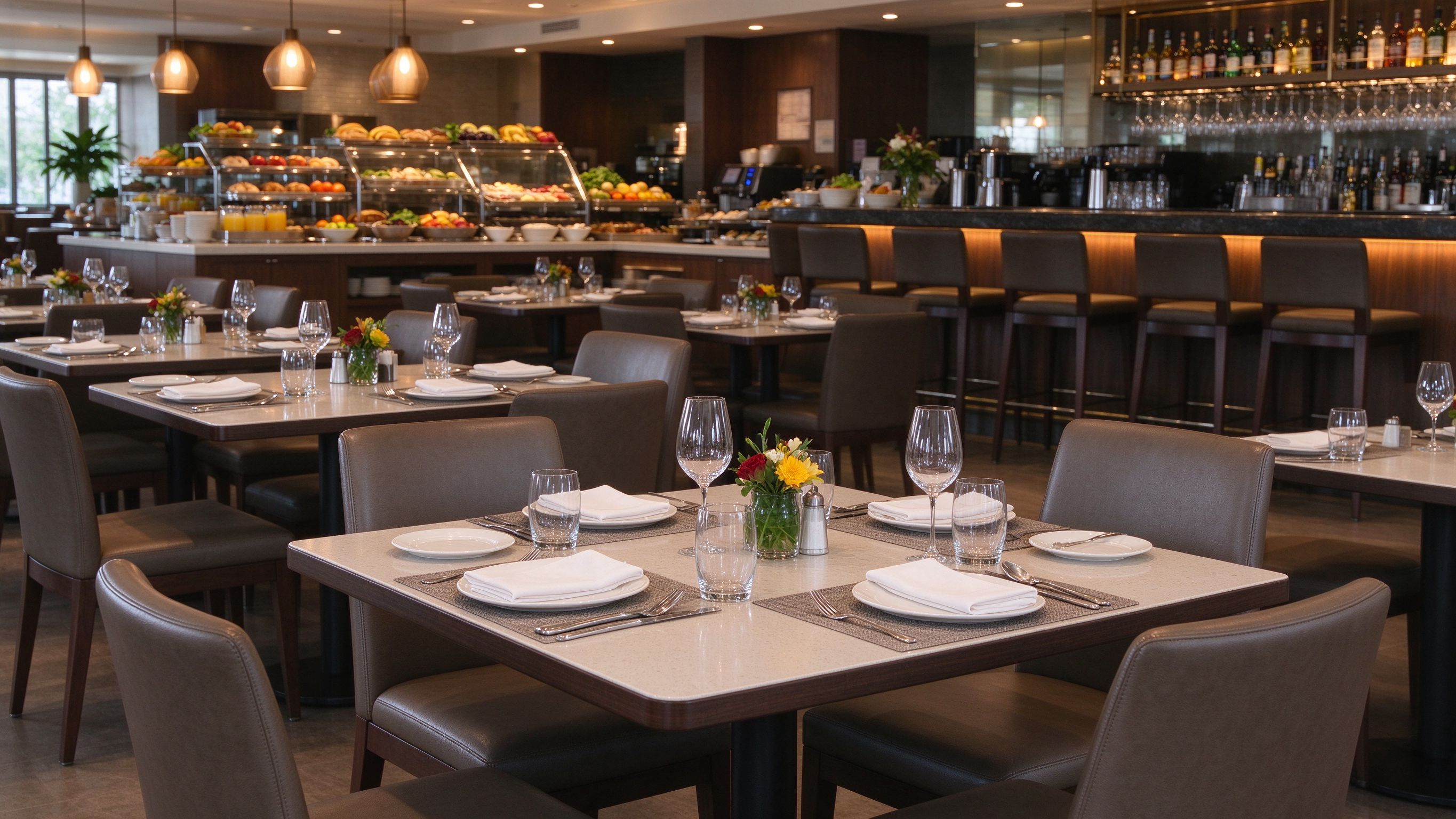
The high-purpose dining table surface benefits from the heat resistance and stain resistance of HPL, making it easy to clean - ideal for breakfast rooms and buffet areas
The tables in the hall can be made of solid wood or high-quality veneer to demonstrate their visual effect. HPL remains a wise choice for auxiliary tables and high-flow side surfaces, which require durability without compromising the visual appeal.
Poolside bars, terraces and conference coffee stations should use HPL as it is moisture-proof and heat-resistant. The solid wood in these areas needs to be carefully sealed and maintained regularly, and the veneers need to be strictly protected.
There is no best desktop material; there is only the one that suits each table best. HPL demonstrates resilience, consistency and low cost in high-usage and high-turnover fields. Wood veneer offers genuine warmth at mid-range prices for high-end guest rooms. Solid wood offers unparalleled features, and design is the top priority. Planning for new or renovated hotel furniture? Work with suppliers who can customize tables, make your selection based on your actual usage, and provide consistent quality throughout the project.


