Sliding doors are not merely a practical way to move between Spaces; they transform your living areas by maximizing the use of natural light, enhancing spatial efficiency, promoting energy conservation, and elevating the overall aesthetic appeal of your home. Whether you are renovating your living room, upgrading your courtyard entrance, adding partitions between rooms, or decorating your closet, choosing the perfect sliding door requires careful consideration of your space, lifestyle, budget and personal style. This comprehensive buyer's guide breaks everything you need to know to make informed decisions, from understanding different door types to choosing the right materials, sizes and functions, ensuring your sliding doors stand the test of time.
Step 1: Start with your family space and goals
Before delving into the types or materials of doors, take some time to define the unique needs of your home and your core goals. Sliding doors vary greatly in design and function, so making your choice consistent with your lifestyle and space is the key to avoiding regret.
- Which area of your home do you plan to renovate? (Living room, terrace, bedroom, bathroom, closet or home office?)
- What is the main function of sliding doors? (Indoor partitions, closet doors or space-saving entrance passages?)"
- Do you prioritize energy efficiency or aesthetics?
- Is there any need for safety or accessibility? For example, child safety locks that are easy for the elderly to operate, or pet-friendly designs.
- What's your budget?
Step 2: Select the appropriate type of sliding door
There are several types of household sliding doors, each designed for a specific space and purpose. Understanding these differences will help you find the home that suits you best. The following are the most popular types of sliding doors used:
- Design: The most common household sliding door, with two panels. They have a simple and smooth design that suits most home styles, from modern to traditional.
- Most suitable for: terraces, balconies, living rooms and larger indoor Spaces. They are ideal choices for connecting indoor and outdoor areas because they maximize the use of natural light and create seamless transitions.
- Advantages: Space-saving, easy to operate, reasonable price, and wide range of sizes. Their maintenance costs are also very low, and they can be customized according to different glass options.
- Disadvantage: The maximum opening width is limited by the size of the sliding panel. It is not ideal for Spaces that require complete and unobstructed passageways.
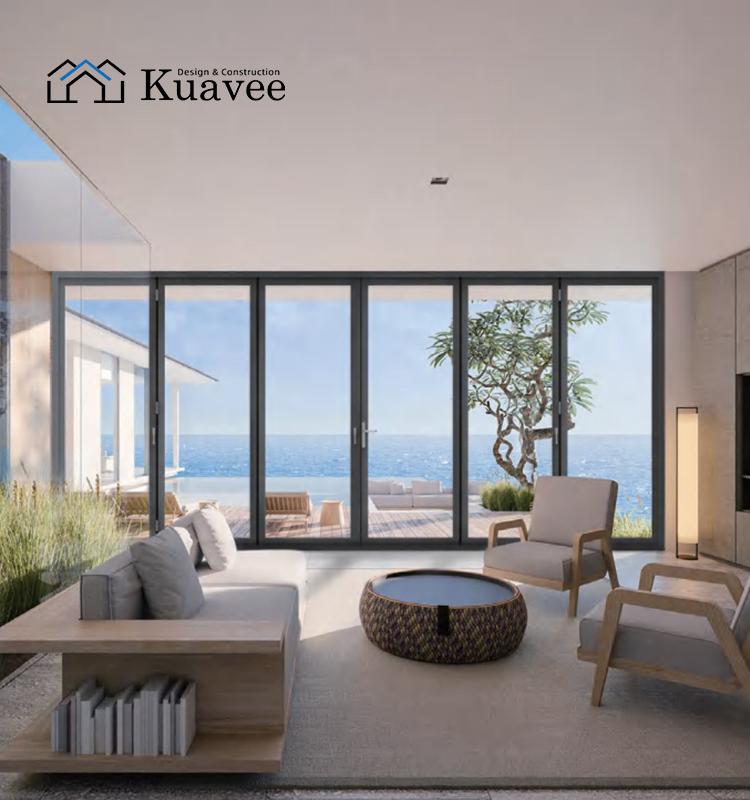
- Design: Also known as multi-panel sliding doors, these feature 3 to 6 panels that slide and stack on top of each other. They can create wide openings, blurring the boundaries between indoor and outdoor Spaces.
- Most suitable for: large living rooms, terraces or backyards - It is an ideal choice for homeowners who want to maximize the use of natural light and create an open and ventilated feeling. They are perfect for entertainment or enjoying the outdoor scenery.
- Advantages: When fully opened, it provides a complete and unobstructed passage, enhances indoor and outdoor traffic, and adds a modern and luxurious look to your home. The panel can be customized to accommodate ultra-wide openings.
- Disadvantages: It is more expensive than bypass sliding doors, occupies more track space, and requires regular maintenance to ensure the smooth operation of the multi-panel.
- Design: Compact and lightweight sliding doors specifically designed for wardrobes, which are usually narrower than patio sliding doors and can be custom-made with frosted glass, mirrors or solid panels.
- Most suitable for: walk-in wardrobes, built-in wardrobes or small-sized wardrobe doors. Mirror sliding doors are a popular choice because they increase light and make small rooms feel larger.
- Advantages: Space-saving, affordable, easy to install, and available in multiple styles to match your home decoration. They have low maintenance costs and are very suitable for hiding sundries.
- Disadvantage: Not suitable for high-traffic areas or outdoor use. If not made of high-quality materials, some lightweight options may make people feel very fragile.
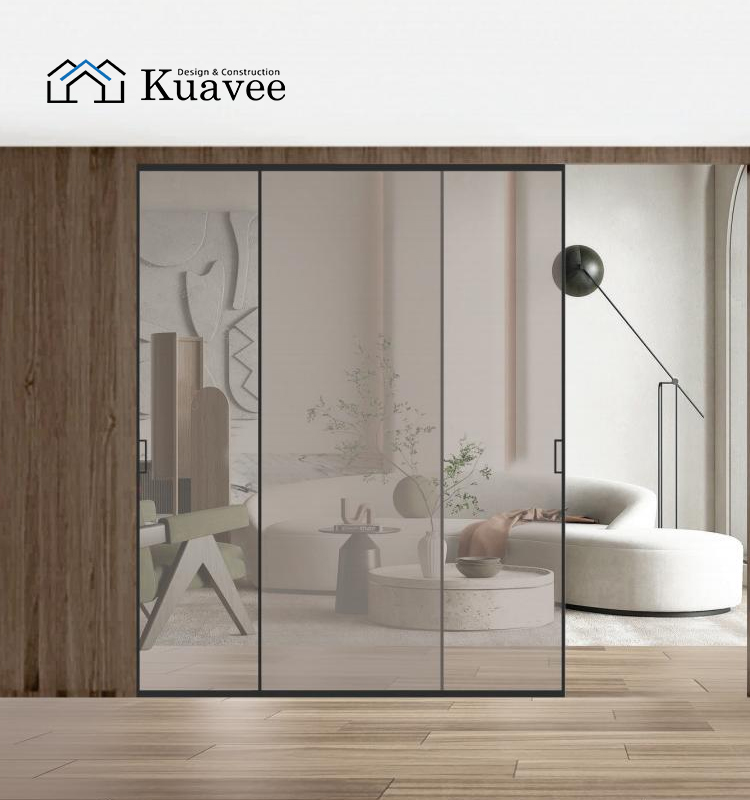
Step 3: Select appropriate materials for the sliding door
The material of sliding doors can affect their durability, maintenance requirements, energy efficiency and aesthetic appeal. The following are the most common materials for residential sliding doors:
- Advantages: The most popular material for household sliding doors, lightweight, durable, corrosion-resistant, and low maintenance. They are also highly customizable, offering a variety of finishes and capable of supporting large glass panels. Many aluminium doors have heat insulation barriers to enhance energy efficiency and address the issue of natural thermal conductivity of the material.
- Disadvantage: It is not as energy-efficient as vinyl or wood, unless equipped with a thermal break. If there is no proper insulation, it will feel cold in winter.
- Advantages: Budget-friendly, high energy efficiency, low maintenance. Vinyl frames are resistant to moisture, rot and corrosion, making them an ideal choice for humid or coastal climates. They are available in a variety of colors and can imitate the appearance of wood, providing design flexibility at a low cost.
- Disadvantage: It will warp at extremely high temperatures. The customization options for large or extra-wide doors are limited.
- Advantages: Timeless and luxurious aesthetics, adding warmth and elegance to traditional, country, or cottage style residences. Natural wood has excellent heat insulation and sound insulation properties. Pressed board wood grain doors not only possess the same aesthetic appeal but also offer greater durability, resistance to decay and bending.
- Disadvantage: Natural wood requires regular maintenance to prevent rotting, warping and insect infestation. It is also more expensive than aluminium or vinyl and has poorer resistance to bad weather
Step 4: Get the Size Right
- Measure the width: Measure the opening from left to right at the top, middle, and bottom. Subtract 10mm from the smallest width to allow space for smooth opening and closing.
- Measure the height: Measure from the sill to the top of the opening on the left, center, and right. Subtract 10mm from the smallest height to ensure proper clearance.
- Check for square: Measure diagonally from opposite corners of the opening. If the two measurements are equal, the opening is square. If there’s a difference, you may need adjustments during installation to avoid misalignment.
- Measure threshold height: For exterior sliding doors, measure the height from the interior floor to the top of the threshold and from the exterior floor to the top of the threshold. This ensures the door fits properly and prevents water leakage.
- Account for track space: Sliding doors require track space (either along the wall or in a pocket). For bypass doors, ensure there’s enough wall space for the sliding panel to overlap the fixed panel. For pocket doors, confirm the wall can be modified to create the pocket
Final Step: Choose a Trusted Home Sliding Door Supplier
Choosing the right supplier is as important as choosing the right door. Looking for a supplier specializing in residential sliding doors and offering:
- Custom options: You can create custom sizes, materials and finishes to meet the unique needs of your home. They offer design consultation to help you visualize the final product.
- High-quality products: Doors that meet residential standards and come with warranties.
- Local experts: Understand the local climate conditions and home design trends to ensure they recommend the best door types and materials for you.
Are you ready to choose the perfect sliding door for your home?
Whether you are connecting a garden, adding a closet door, or dividing a room, the perfect home sliding door enhances the functionality, aesthetics and comfort of your space. Our team of home sliding door experts is here to offer assistance. We offer customized solutions for all residential Spaces, using high-quality materials, designed to suit your home, and backed by reliable services.


